

Summer Programme
Looking for a challenging summer programme for secondary students in Tokyo? Laurus offers an immersive STEAM experience for ages 11–15, featuring advanced science experiments, robotics, AI/programming, and global collaboration—all in a full English environment.
↓ Select your child's age group
This Summer, Challenge Yourself to Think Beyond Boundaries
Laurus Summer Programme is designed for secondary students (ages 11–15) who want more than a typical summer experience. Through advanced STEAM projects, hands-on robotics, AI exploration, and collaborative problem-solving, students tackle real-world challenges in a fully English environment. This is a summer that builds critical thinking, global perspectives, and the confidence to lead.
Programme Highlights
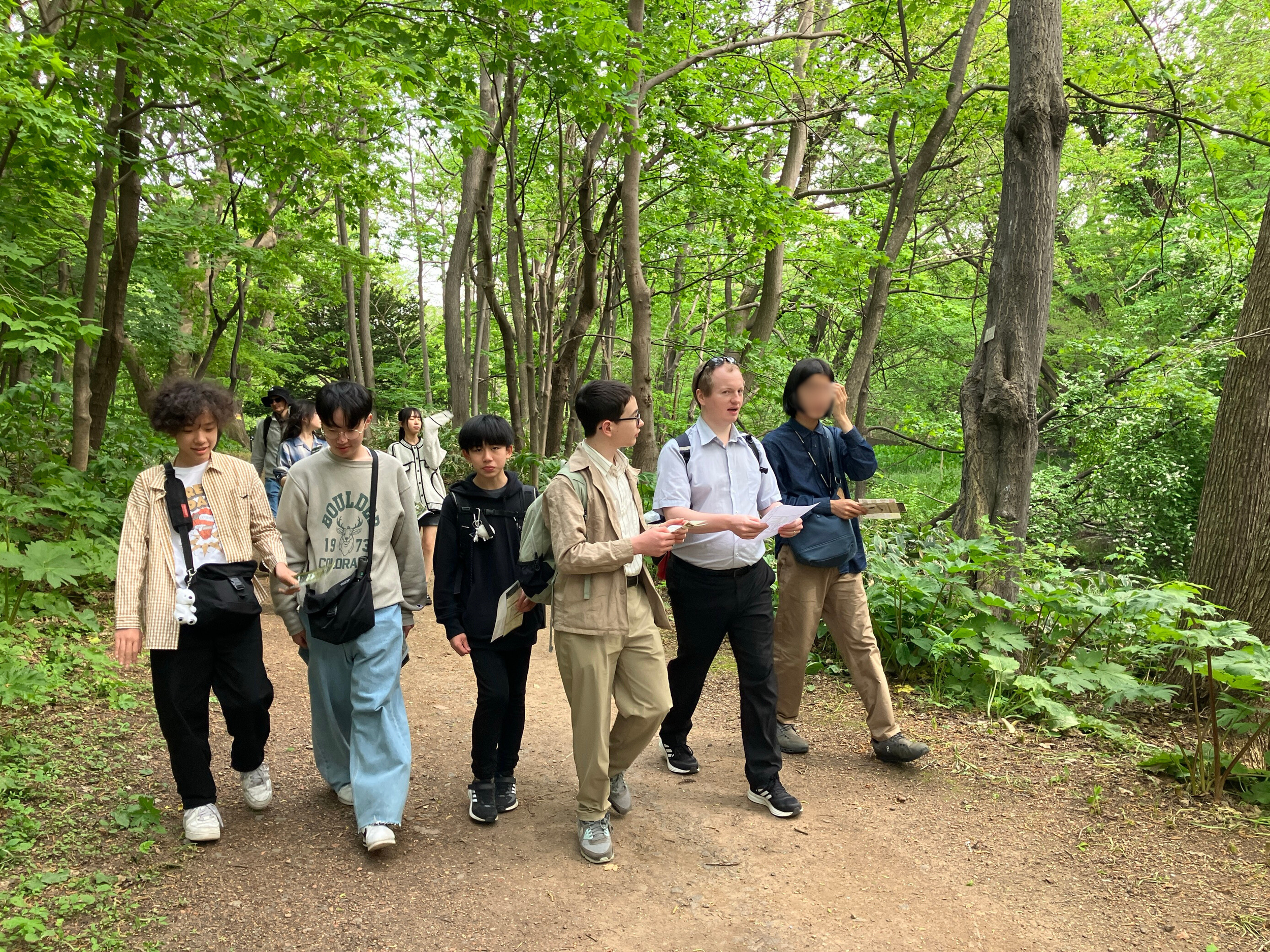
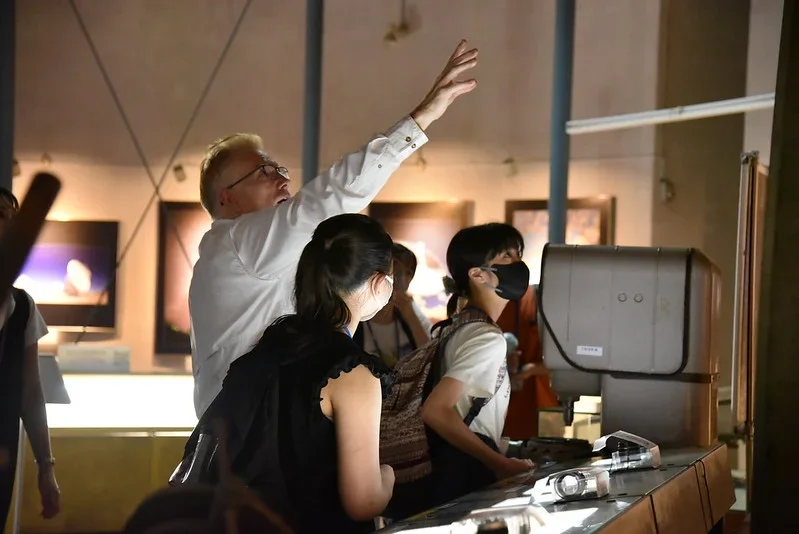
Activities from past summer programmes for secondary students

Tackling real-world challenges through science and technology


Advanced STEAM Curriculum
In-depth projects in robotics, AI, programming, and scientific research designed for secondary students
Full English Immersion
Academic English environment with native-speaking instructors—build fluency through meaningful discourse
Real-World Field Trip
Visit leading research institutions like JAXA, universities, and tech companies. Connect classroom learning to real-world innovation and career pathways.






What is a Summer Programme?
A summer programme is an intensive short-term educational experience designed to challenge students beyond the regular curriculum. For secondary students (ages 11–15), these programmes offer advanced academics, specialized skill development, and exposure to new fields—often in an international, English-speaking environment.
As global education gains importance, more secondary students in Japan are seeking summer programmes that combine rigorous STEAM learning with cross-cultural experiences. In Tokyo, students can now access world-class programmes featuring robotics, AI, scientific research, and hands-on STEAM projects—without traveling abroad. These experiences help students build critical skills for future academic and career success.

Three Programmes for Every Age
Laurus offers three types of programmes tailored to age and purpose—from preschoolers to secondary school students.
At Laurus, Summer School and Summer Programme are designed for different age groups and academic levels. Summer School (ages 6–11) offers a 7-week inquiry-based STEAM curriculum for elementary students, focusing on foundational science, creativity, and English immersion. Summer Programme (ages 11–15) is a more advanced 4-week experience for secondary students, featuring university-level content such as astrophysics, AI/robotics, molecular biology, and research-based projects that prepare students for higher education.

Summer Camp
Fun STEAM activities for preschoolers and kindergarteners. Join from just 1 day at 8 campuses across Tokyo and Kawasaki.
View Summer Camp
Summer School
7-week inquiry-based STEAM programme for elementary students. Weekly themes from cutting-edge technology to neuroscience.
View Summer School
Summer Programme
4-week advanced STEAM programme for secondary students. University-level experiences including astrophysics, AI/robotics, and molecular biology.
View 2026 Summer ProgrammeBenefits of Summer Programme
What secondary students gain from programme participation
Academic English
Develop advanced English skills through academic discussions, presentations, and research projects in a full immersion environment.
Career Exploration
University-level STEAM experiences in astrophysics, AI, and bioscience help students discover academic interests and potential career paths.
Critical Thinking
Tackle real-world challenges through research-based projects that develop analytical reasoning and problem-solving abilities.
Leadership Skills
Collaborative projects with peers from diverse backgrounds build confidence, teamwork, and the leadership abilities essential for future success.
A Week in Summer Programme
Sample weekly schedule · 5 days / 10:00–15:30
| Time / Day | Monday | Tuesday | Wednesday | Thursday | Friday |
|---|---|---|---|---|---|
| Today's Theme Title | Today's Theme Title | Today's Theme Title | Today's Theme Title | Field Trip | |
| 10:00 – 10:30 | Welcome & Introduction | Welcome Game | Welcome Game | Welcome Game | Welcome & Field Trip Prep |
| 10:30 – 10:55 | Intro to Today's Theme | Intro to Today's Theme | Intro to Today's Theme | Intro to Today's Theme | Field Trip |
| 10:55 – 11:05 | Break | Break | Break | Break | |
| 11:15 – 11:40 | Activity 1 | Activity 1 | Activity 1 | Activity 1 | |
| 11:40 – 12:40 | LUNCH / Recess | LUNCH / Recess | LUNCH / Recess | LUNCH / Recess | LUNCH |
| 12:40 – 13:30 | Reflection & Intro to Activity 2 | Reflection & Intro to Activity 2 | Reflection & Intro to Activity 2 | Reflection & Intro to Activity 2 | Field Trip |
| 13:30 – 13:40 | Break | Break | Break | Break | |
| 13:40 – 15:00 | Activity 2 | Activity 2 | Activity 2 | Activity 2 | Return to School |
| 15:00 – 15:15 | Cleanup & Reflection | Cleanup & Reflection | Cleanup & Reflection | Cleanup & Reflection | Cleanup & Reflection |
| 15:20 | Student Dismissal | ||||
| 15:30 | Teacher Dismissal to 1F | ||||
* This is a sample schedule. Weekly themes and activities vary by week.
6 Reasons We're Chosen
Laurus Summer Programme—trusted by secondary students preparing for global futures
Taught by Our Own Teachers
Laurus is one of only a few schools in Japan offering the Cambridge International Curriculum—adopted in over 150 countries—all the way through IGCSE and A-Level. Our Summer Programme gives students the opportunity to learn with experienced native English-speaking teachers from a Cambridge school. Learn more →
University-Level STEAM
Go beyond basics with advanced projects in astrophysics, AI/robotics, molecular biology, and VR/AR development. Our curriculum is designed to challenge secondary students and prepare them for higher education.
Academic English Immersion
Full English environment with native teachers experienced in secondary education. Develop the academic English skills needed for international exams, university applications, and global careers.
Research Institution Visits
Exclusive access to JAXA, the National Astronomical Observatory, universities, and tech companies. Connect with researchers and professionals to explore real career pathways in STEAM fields.
Flexible Weekly Enrolment
Join for 1 week or all 4 weeks—choose a schedule that fits your summer plans. Each week features a different advanced theme, allowing students to focus on their areas of interest.
Pathway to Full-Time Enrolment
Many Summer Programme participants discover Laurus's world-class secondary education and choose to enrol full-time. Experience our IGCSE and A-Level programmes before committing.
Shiba Campus — A Science-Themed Learning Environment
Located on floors 7-10 of the Shiba International Building in Minato-ku, right next to Tokyo Tower, our Primary and Secondary campus opened in 2023. Designed by our founding director as a "knowledge amusement park" with science themes throughout. An unparalleled educational facility supporting inquiry-based learning through seeing, touching, and thinking.
Ocean
Bright, open classrooms designed for collaborative learning and STEAM activities for elementary students.
Planet Earth
State-of-the-art laboratories equipped for hands-on experiments and scientific exploration.
Singularity
Advanced learning spaces for middle and high school students with specialized equipment.
Ad Astra
Multipurpose area for presentations, art projects, and creative collaboration activities.
Previous Themes
Engaging themes that change each year
Laurus World Expo
sports science, smart cities, indoor innovation, food science, future technology, sustainability, and extreme weather through engaging, hands-on learning experiences.
STEAM Summer Programme
Students explore three themes—bioscience, astronomy, and biomechanics—through hands-on experiments, lectures, and workshops led by expert researchers and science and technology specialists.
STEAM Summer Programme
Weekly-themed summer school program where each week explores an exciting topic—from dinosaurs and movie-making to AI, biotechnology, space exploration, and aviation—through hands-on, interactive learning experiences.
Participant Testimonials
Feedback from students and parents who participated in our summer programmes
The AI and robotics projects were far more advanced than anything I'd done at school. Working with students from different countries on real coding challenges pushed me to think in new ways. I'm now seriously considering studying computer science at university.
My son was hesitant about his English ability, but the academic discussions and presentations gave him real confidence. The teachers treated students as young researchers, not children. He came home talking about molecular biology and career options I'd never heard him mention before.
The visit to JAXA and meeting actual researchers changed my perspective on what's possible. Presenting our group research project in English was challenging, but it showed me I can handle university-level work. This experience will definitely help with my IGCSE preparation.
We were looking for a programme that would challenge our daughter intellectually while improving her academic English. The astrophysics week exceeded our expectations—she connected with peers who share her passion for science and is now considering applying to Laurus full-time for IGCSE.
Application Process
Easy 4-Step Application
Apply Online
Fill in required information via form
Receive Confirmation
Details and fee information sent
Payment
Cash payment at convenience stores or bank transfer via internet banking
Ready to Join
Information about what to bring
Select your child's age group
Frequently Asked Questions
About the Programme
A. There is no specific visa type required to join, and children can participate on any visa status. We simply ask that you submit a copy of an insurance policy that is valid for use in Japan to cover your child during the program.
A. Summer School (ages 6–11) is designed for elementary students with inquiry-based STEAM activities. Summer Programme (ages 11–15) offers advanced, university-level content for secondary students, including robotics, AI, astrophysics, and molecular biology. The Programme features more independent research projects and academic English development.
A. Summer Programme is designed for students aged 11–15 (typically Year 6 to Year 10 / 6th grade to 9th grade). Students are grouped by age and ability to ensure appropriate academic challenge.
A. The Summer Programme runs for 4 weeks, with each week featuring a different advanced theme. Students can participate for 1 week or multiple weeks. Each week is self-contained, so joining for a single week provides a complete learning experience.
A. Laurus Summer Programme offers all-English academic environment comparable to UK summer programmes—right here in Tokyo. The cost is significantly lower than overseas programmes, there's no need for international travel, and parents can maintain close contact. It's an ideal stepping stone before challenging overseas programmes or universities.
Academic Level & English Requirements
A. Summer Programme is conducted entirely in English at an academic level. Students should be comfortable with conversational English and able to participate in discussions, presentations, and written work. We recommend at least intermediate English proficiency (approximately CEFR B1 or Eiken Grade 2 level).
A.While the Summer Programme is not a formal IGCSE or IB course, it is taught by the same full-time teachers who deliver Cambridge International and advanced curricula at Laurus throughout the year. Students develop academic English, research methods, and presentation skills — all of which strengthen the foundations needed for international qualifications.
A. Absolutely. We welcome students from international schools, local Japanese schools, and schools abroad. The diverse mix of students from different educational backgrounds enriches discussions and collaborative projects.
A. Each week focuses on an advanced STEAM theme such as astrophysics, AI and robotics, molecular biology, VR/AR development, or environmental science. Students engage in hands-on experiments, coding projects, research presentations, and visits to institutions like JAXA and university laboratories.
Application & Fees
A. The deadline is one week before each week's start date. However, places are limited and popular weeks fill up quickly. We strongly recommend applying early to secure your preferred dates.
A. Fees vary by number of weeks attended. Detailed fee information is available at information sessions or upon inquiry. Fees include tuition, materials, facility access, field trip costs, lunch, and insurance.
A. Only one entrance fee required per family if siblings apply for the Seasonal Programme at the same time. Siblings that apply for the Seasonal School or Camp will be charged a separate entrance fee.
We cannot make schedule changes after the closing date. There are no refunds after the deadline. A cancellation fee of ¥1,000 will be charged for any changes or cancellations. Please confirm full details when applying.
Daily Life & Logistics
A. Summer Programme is held at our Shiba Campus in Minato-ku, Tokyo—a state-of-the-art facility next to Tokyo Tower featuring university-grade science laboratories, robotics workshops, and technology hubs across four floors.
A. Yes, nutritionally balanced school lunch is provided. We can accommodate allergies and dietary requirements—please inform us when applying. Students may also bring their own lunch if preferred.
A. Basic items include a water bottle, notebook, indoor shoes, and weather-appropriate clothing for field trips.
A. We provide regular updates including photos.
Next Steps
A. No, but if you want to visit our campus, please contact us to setup a date four school tours where you can see our facilities and meet staff.
A. Yes, many Summer Programme participants choose to continue at Laurus for our IGCSE and A-Level programmes. The summer experience is an excellent way to explore our curriculum and community before making a full-time commitment.
A. For secondary students seeking advanced STEAM education in an English environment, Laurus Summer Programme is an outstanding option. As a Cambridge school, we offer university-level content in astrophysics, AI, robotics, and bioscience—with field trips to JAXA, research institutions, and tech companies. Our Shiba Campus near Tokyo Tower provides world-class facilities for serious academic exploration.